演化
星系演化
星系演化
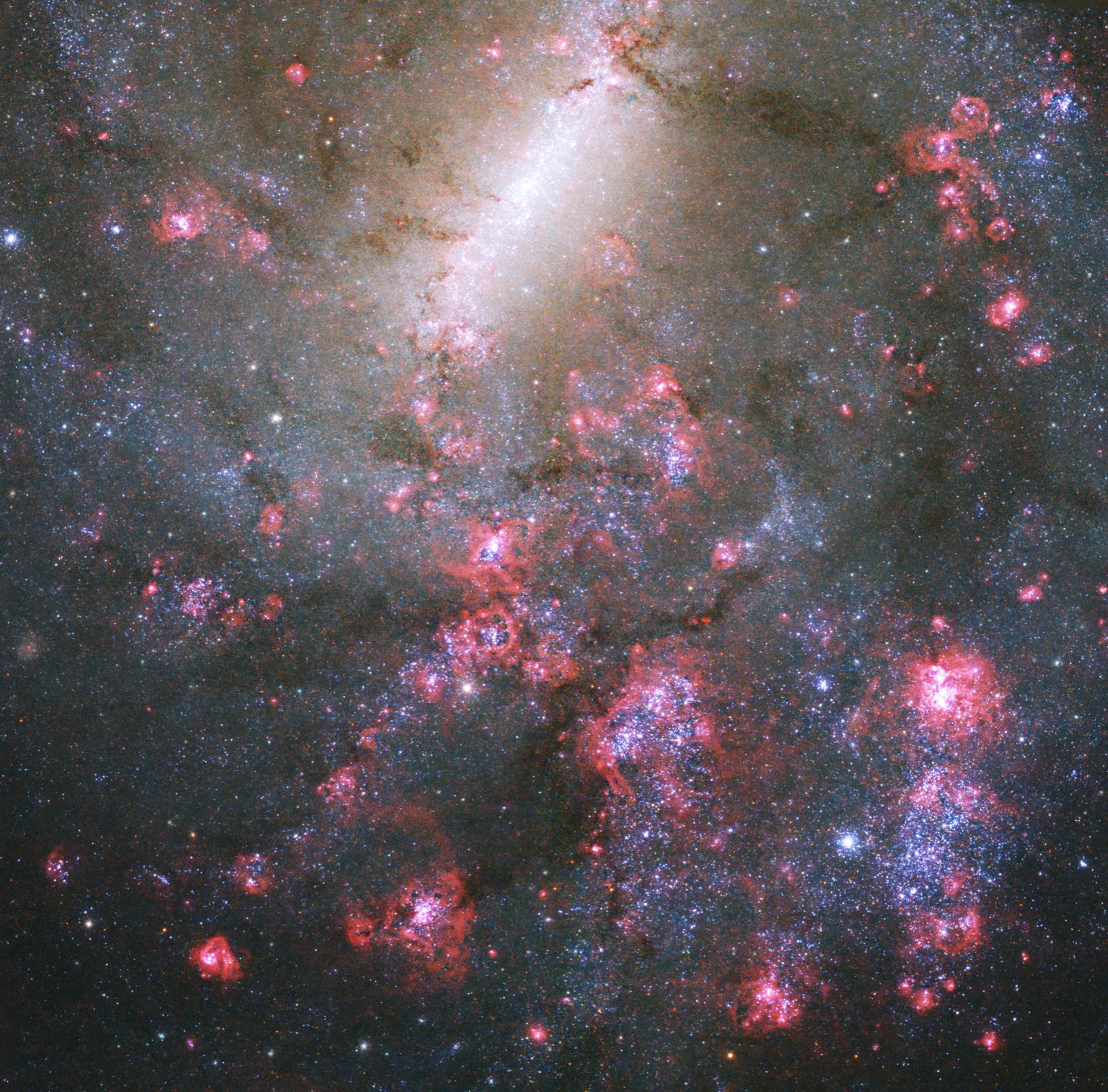
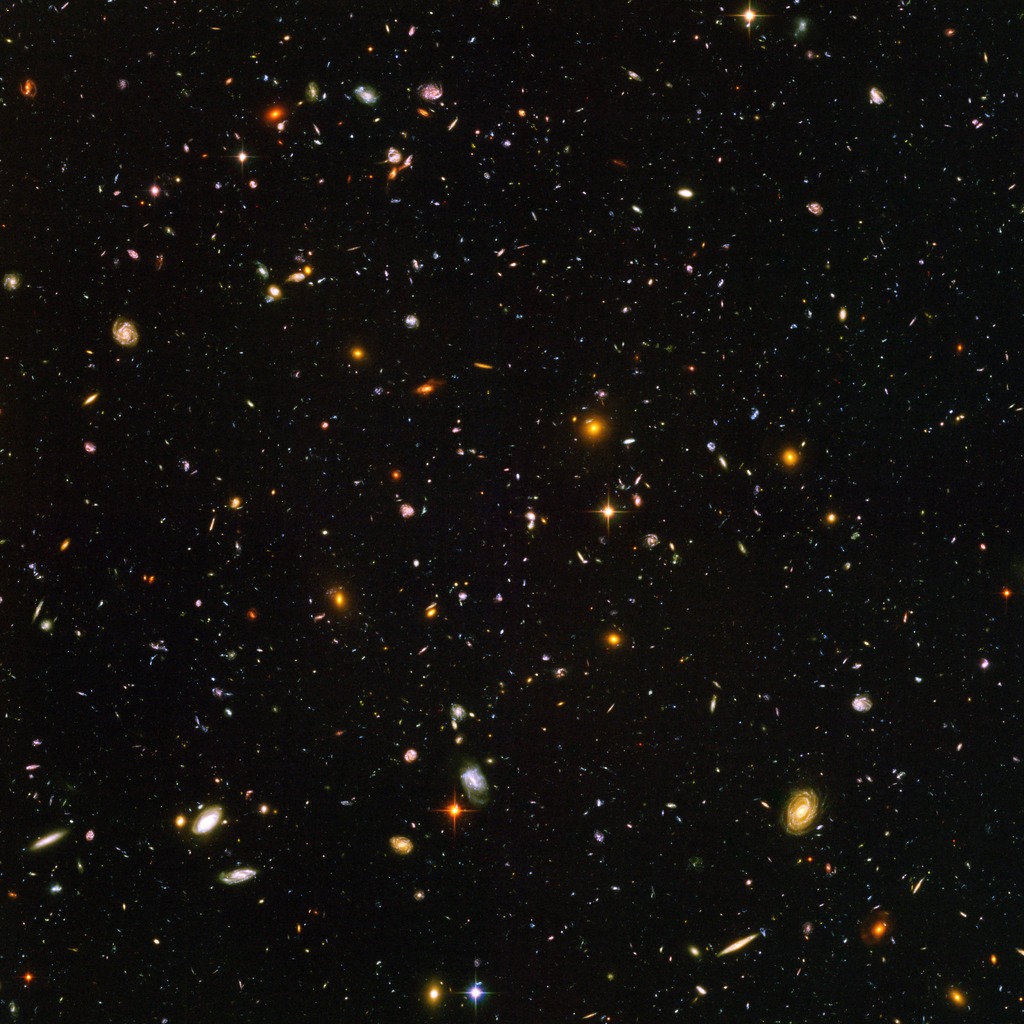
2004 年,NASA 发布了哈勃超深空场(Hubble Ultra Deep Field)。这张图像拍摄的是天炉座(Fornax)的一小片天区,其中包含大约 1 万个星系,有些星系在 130 亿年前就已经存在,那时距离大爆炸(Big Bang)还不到 8 亿年。像这样的快照让科学家能够研究处于不同演化阶段的星系。这有点像是在纽约市时代广场拍下所有人的照片,再用它来研究人类衰老,因为照片中会显示各个年龄段的人。但即使拥有我们所有现代天文台,天文学家对于星系究竟如何开始并成长,仍然有许多疑问。
Formation
Astronomers know that some of the oldest galaxies observed formed when the universe was only about a billion years old. They think those galaxies started to grow around pockets of space that were slightly denser than their surroundings, an effect created by cosmic inflation when the universe began. But when it comes to the exact order of formation, they have a little bit of a “chicken or the egg” problem.
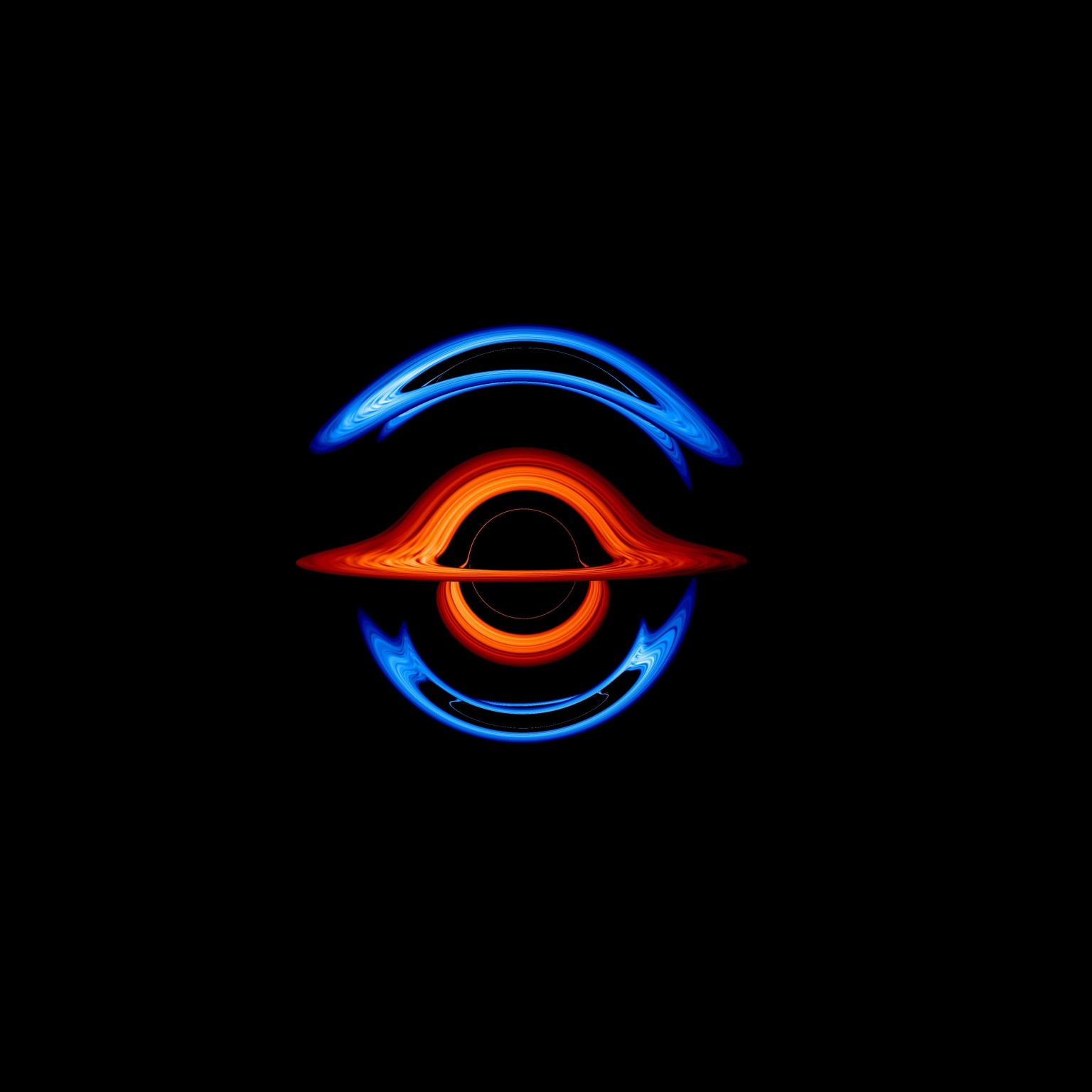
Most big galaxies have supermassive black holes at their centers that pack hundreds of thousands to billions of times the Sun’s mass. A black hole weighing 4 million Suns sits in the center of our own galaxy, the Milky Way. It’s possible that the black holes came first, and galaxies grew around them. Or perhaps the galaxies came first, and small black holes within them merged and fed on gas, dust, and stars, eventually becoming the monsters they are today. Exploring this question is a major goal for NASA’s James Webb Space Telescope.
Spiral Galaxy Bars
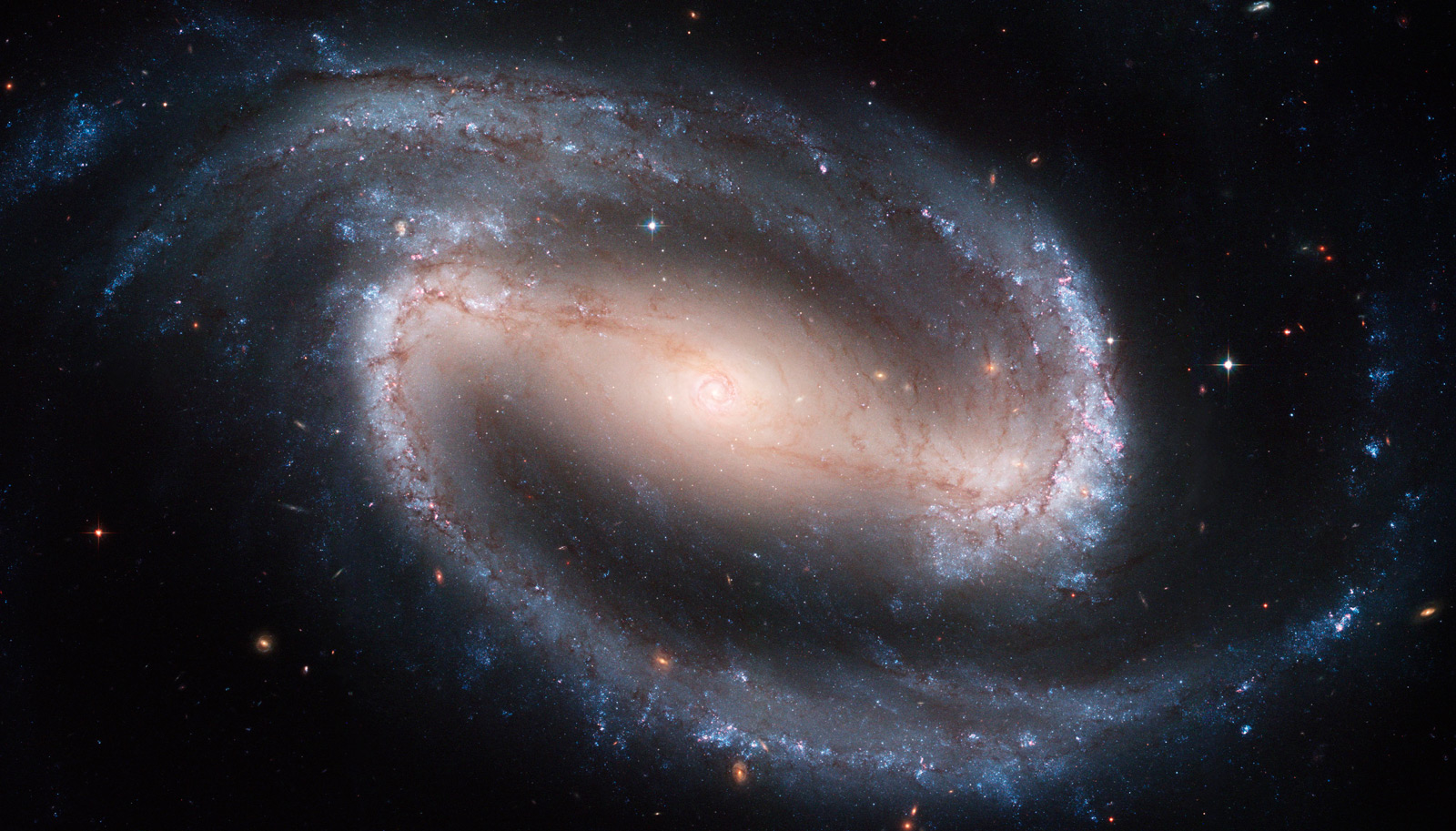
Many older spiral galaxies develop a central band-like structure of stars called a bar. In these galaxies, called barred spirals, this feature connects to the arms rather than the nucleus itself. Scientists think stellar bars are temporary structures that form when stars, gas, and dust at the base of spiral arms build up to make a denser region that favors star formation.
Collisions
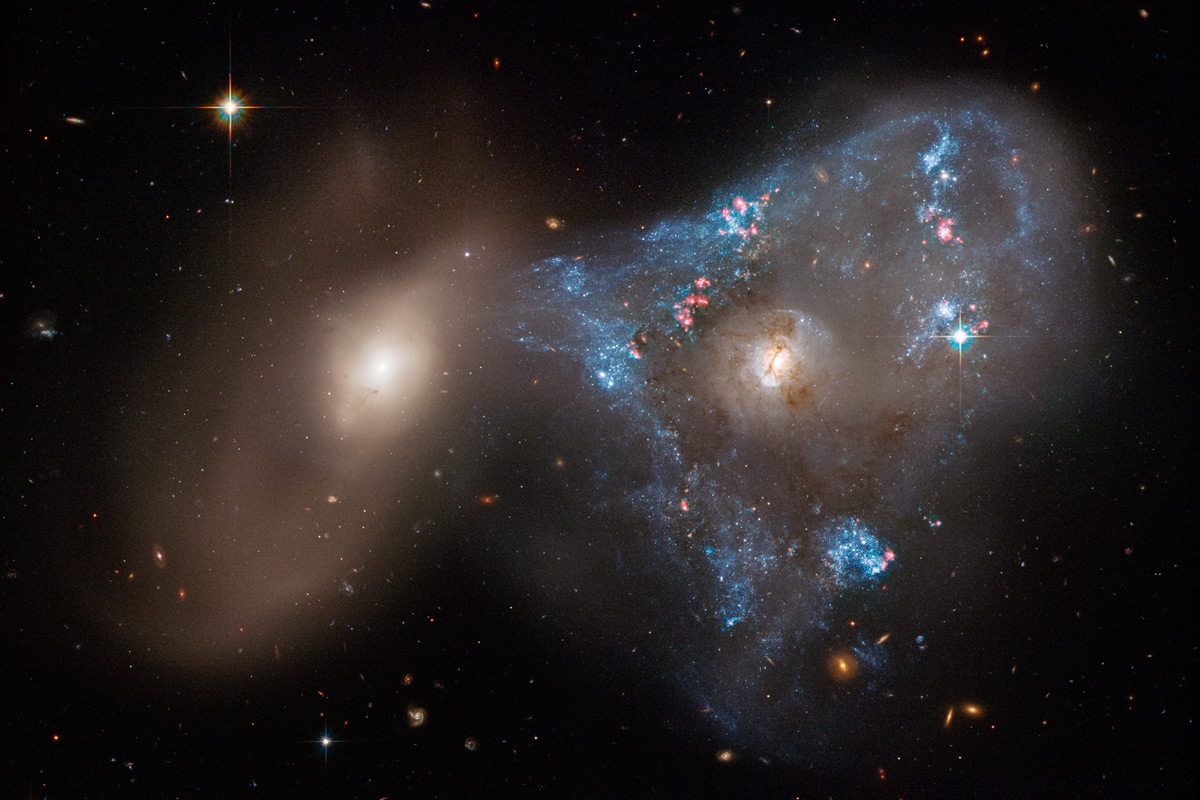
有时候,星系会碰撞。这并不一定意味着它们的恒星会撞在一起——星系中含有大量空旷空间——但碰撞可以压缩气体云,激发新一波恒星形成。每个星系都会因伴星的引力拉扯而变形。天文学家认为,银河系和它的星系邻居仙女星系将在 45 亿年后碰撞。
合并
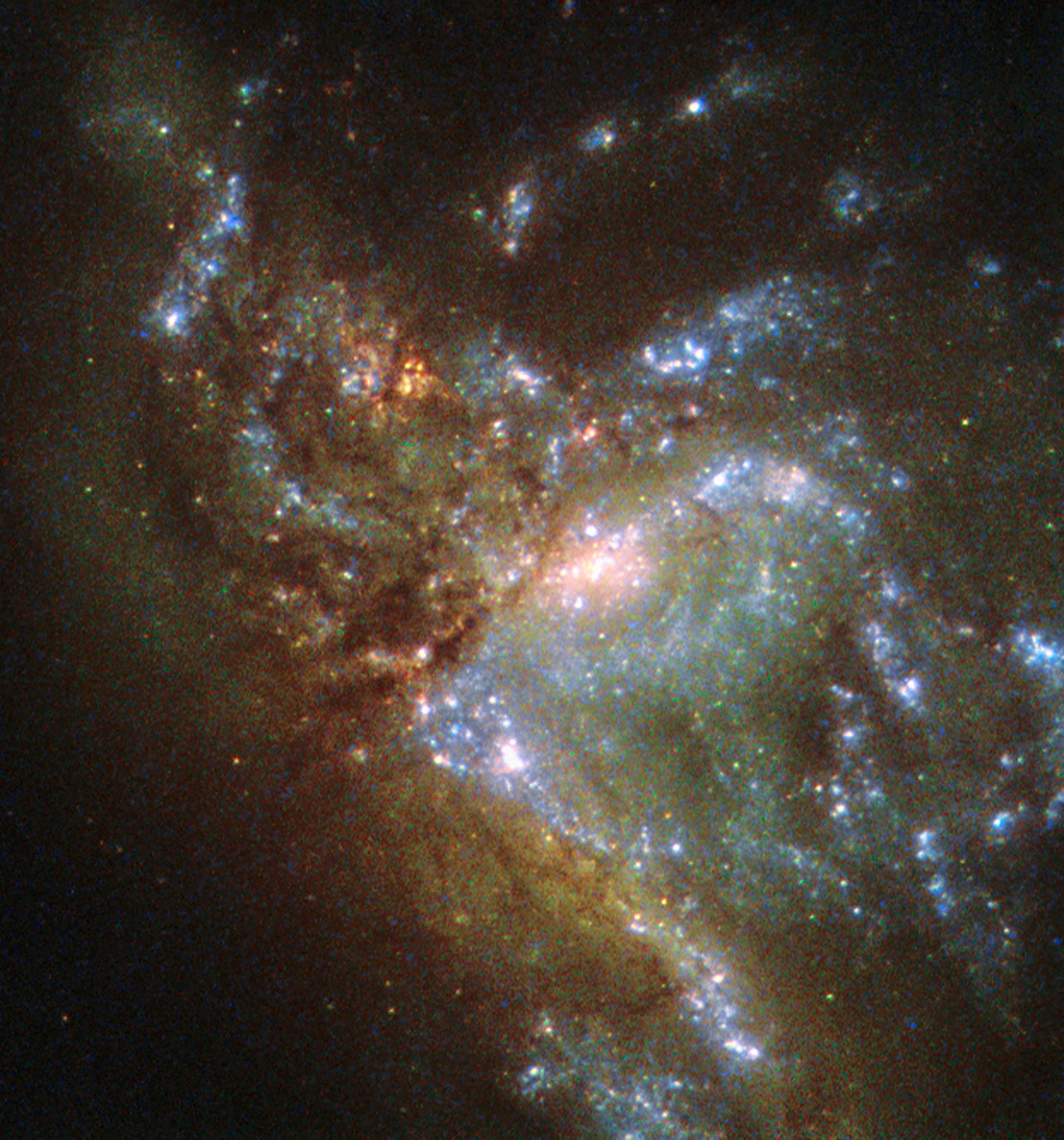
如果碰撞的星系没有足够的动量彼此错开,它们就可能合并成一个更大的单一星系。合并后的星系看起来可能与创造它的两个星系非常不同。例如,如果一个旋涡星系和一个椭圆星系合并,结果可能是一个不规则星系。
如果一个大型星系与一个较小的星系合并,引力涟漪会扰动两者,把气体、尘埃和恒星抛向外侧。结果可能是在新星系边缘形成一圈充满形成新恒星所需物质的物质环——环星系。虽然一些物质被抛向外侧,另一些物质则可能流向核心,为星系中心的黑洞提供燃料,形成活动星系核。
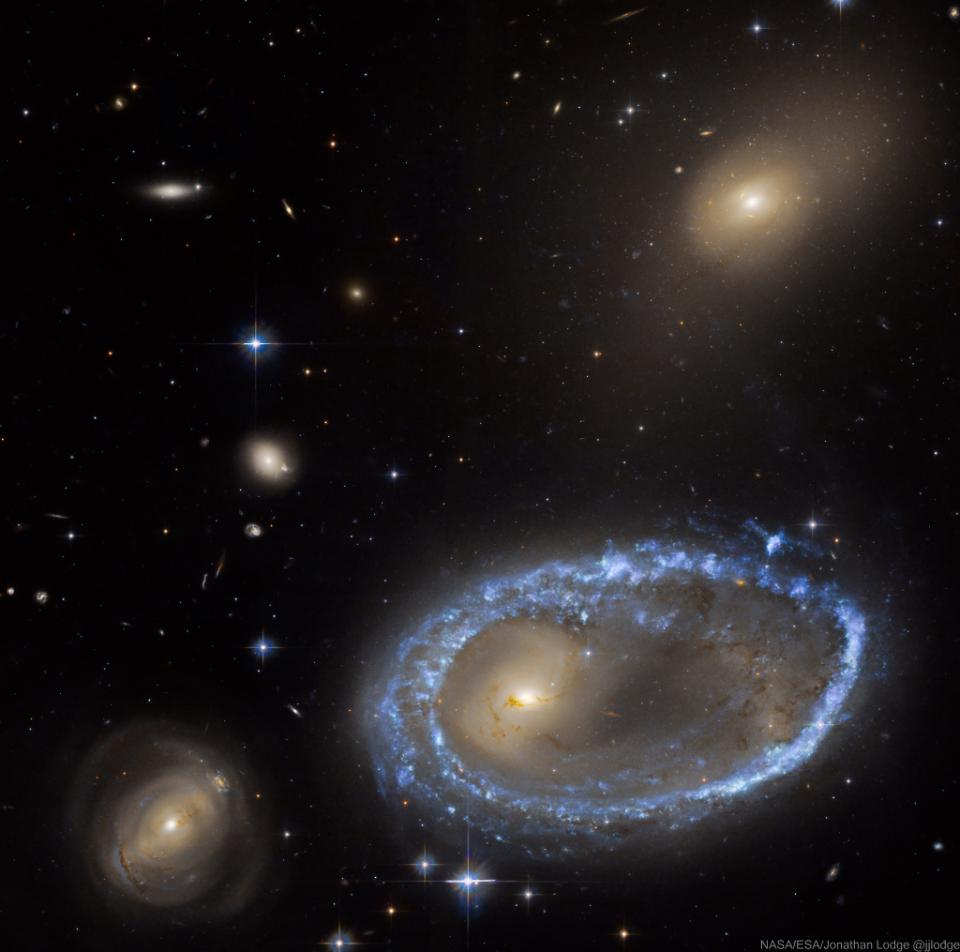
科学家在整个宇宙中都看到了星系合并的证据,而由于大多数大型星系中心都含有超大质量黑洞,按理说它们的黑洞也应该合并。天文学家并不确切知道这类事件应该是什么样子,但他们正在积极寻找答案。
星系吞噬
较大的星系也可以通过近距离和引力相互作用吞并较小的星系,把物质拉走以供给自身成长。研究人员认为,银河系目前正在从其卫星矮星系——大麦哲伦云和小麦哲伦云——中抽走一股氢气流。
通过 Overlap Zoo 参与 NASA 科学
-
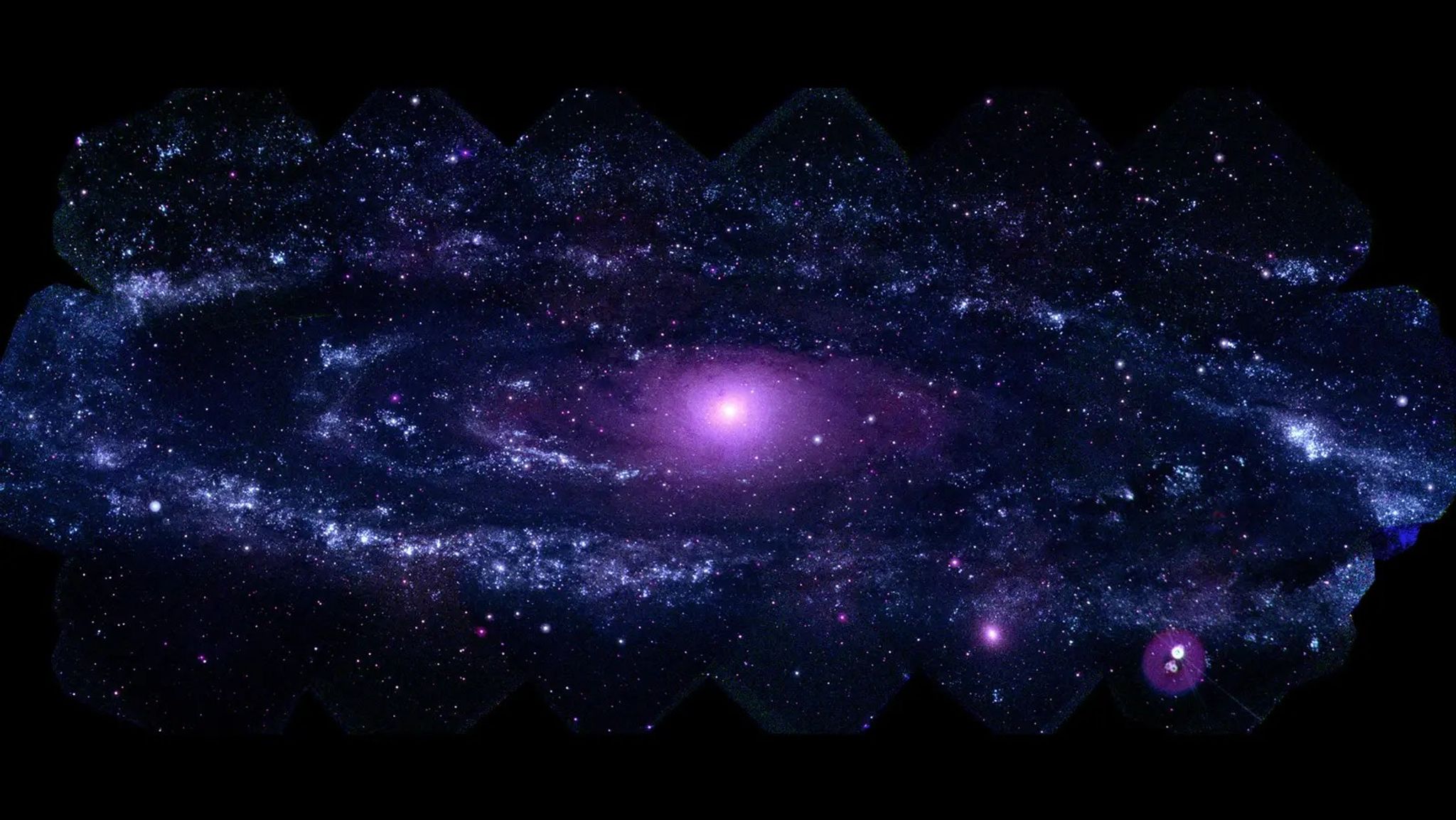
Galaxies, vast collections of billions of stars, gas, and dust held together by gravity, are scattered across the cosmos. But every so often, by coincidence, two galaxies line up from our point of view on Earth (or from a space telescope) and appear to overlap in the sky. Join NASA’s Overlap Zoo citizen science project to help scientists confirm these overlapping galaxy pairs.