当死星相撞!
引力一直在掀起波澜——真的是这样。2017 年 10 月,诺贝尔物理学奖被授予两年前首次直接探测到引力波(gravitational waves)的成果。同样在那个月,astronomers announced a huge advance in the field of gravitational waves:科学家们第一次观测到来自同一来源的光和引力波。我们来看看发生了什么。
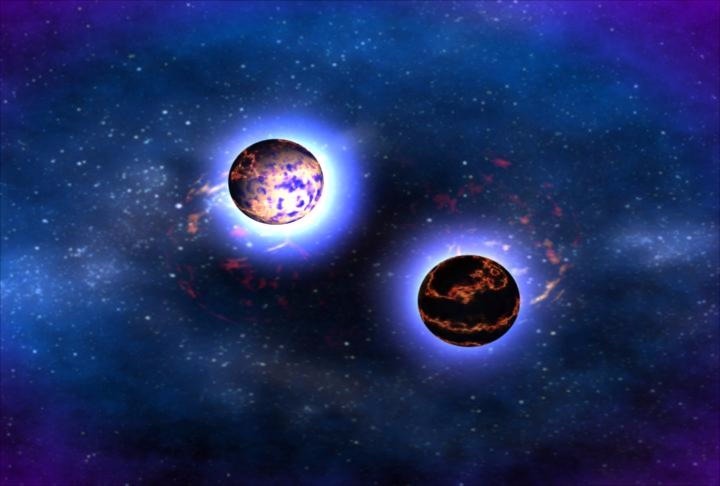
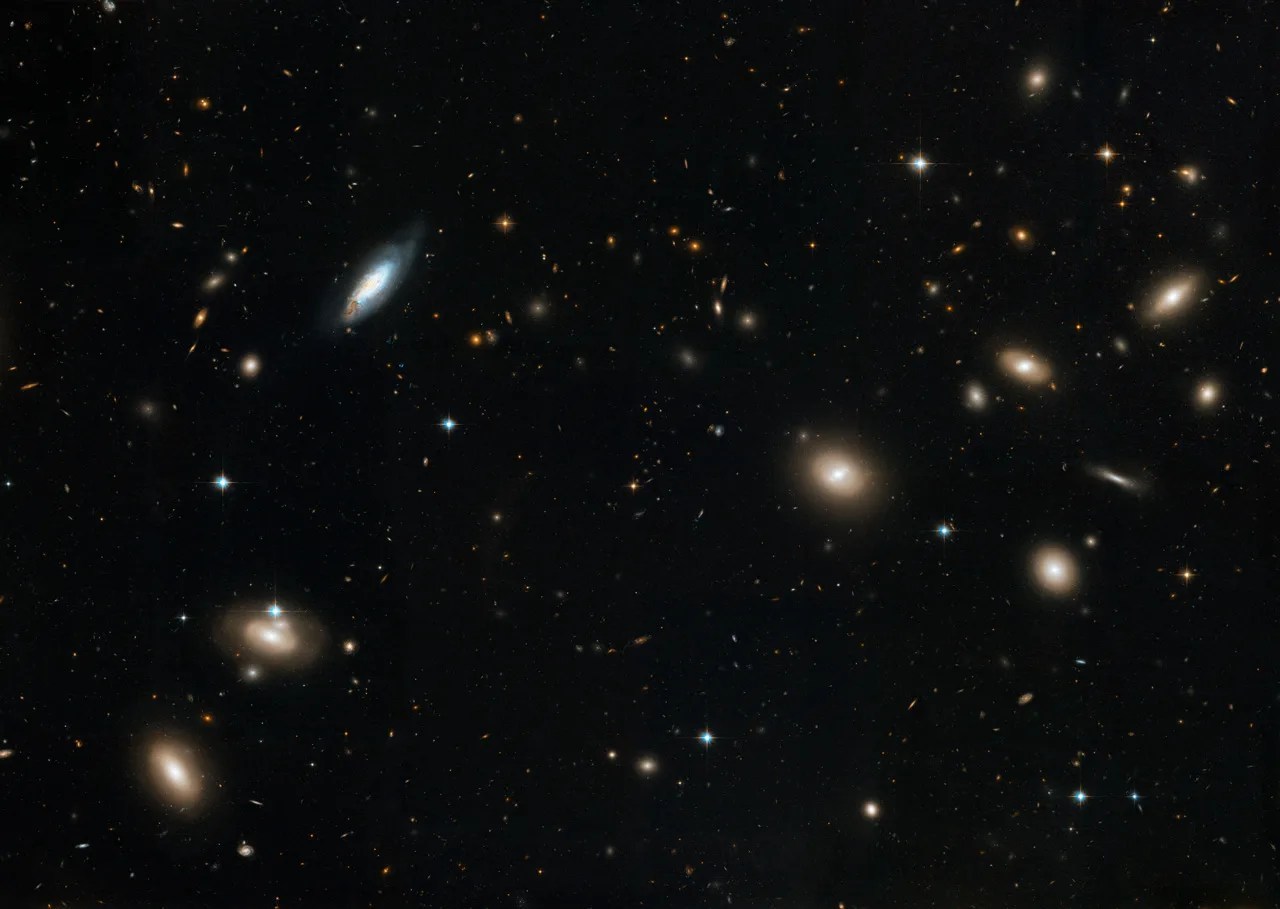
在一个星系(名为 NGC 4993)中,有一对相互绕转的中子星。Neutron stars是大质量恒星(质量超过我们太阳 8 倍的恒星)很久以前作为超新星(supernova)爆炸后留下的压碎残核。在这个星系中,以及在我们能看到的 all 星系中,有许多这样的双星对,但这一对特殊的中子星即将发生一件特别的事。
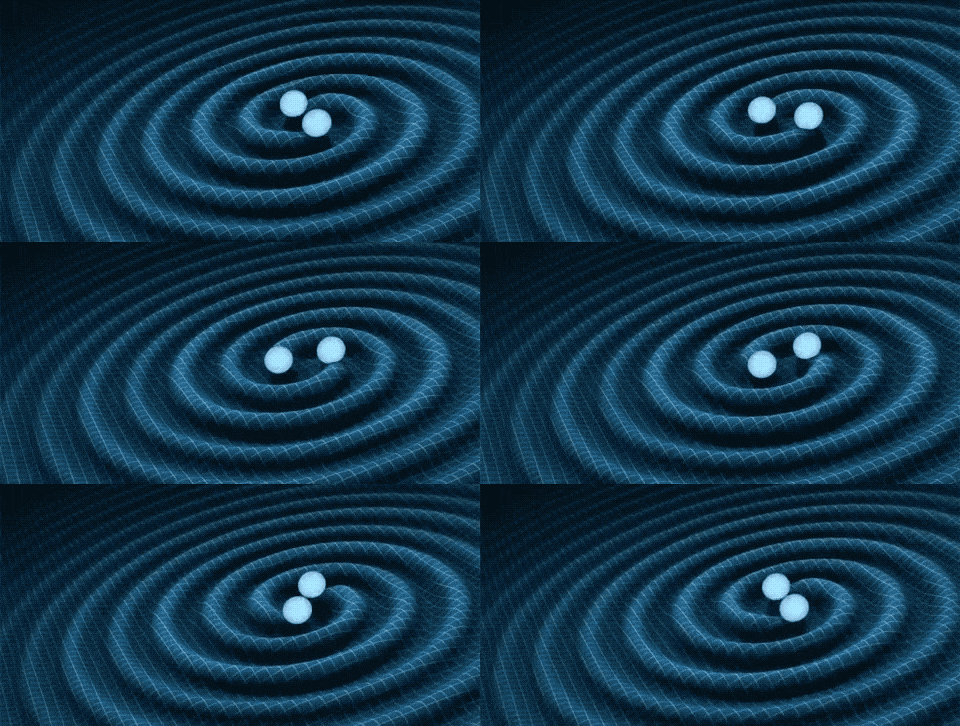
每当这些中子星绕转时,它们
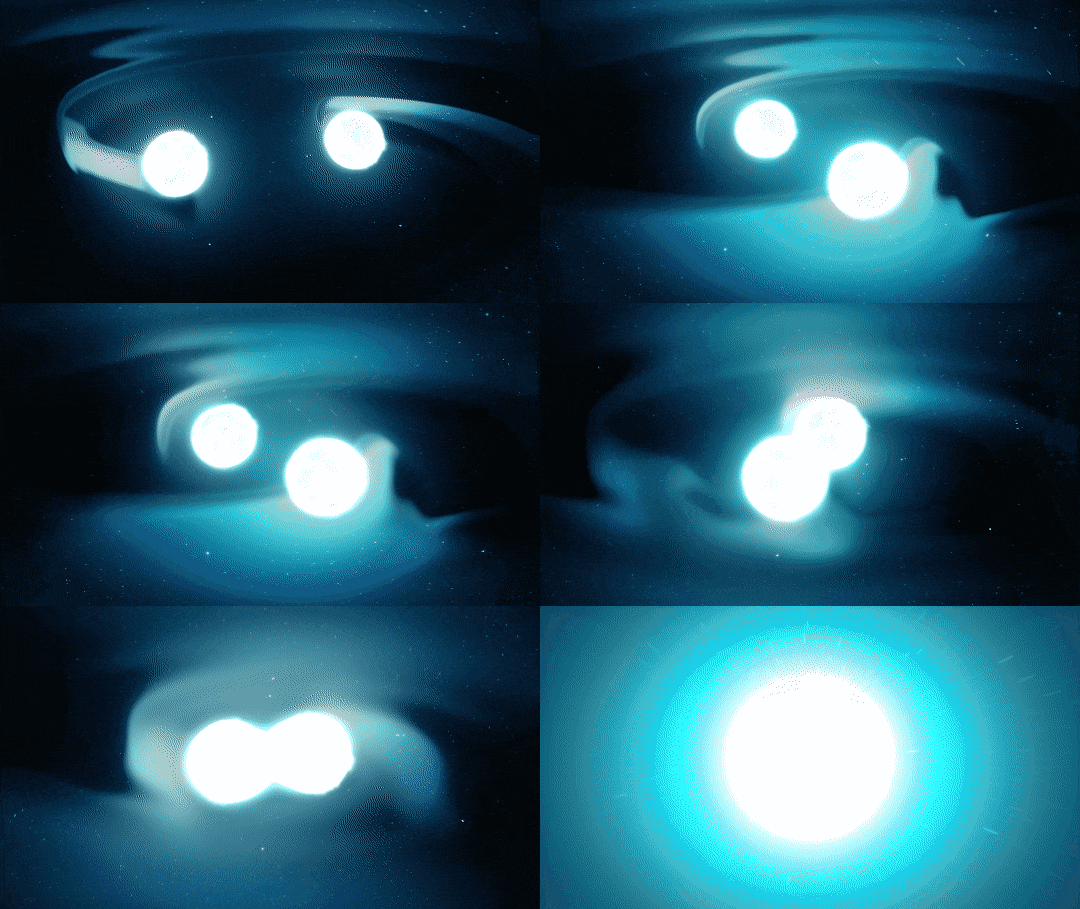
The teeny energy loss caused the two neutron stars to get a teeny bit closer to each other and orbit a teeny bit faster. After hundreds of millions of years, all those teeny bits added up, and the neutron stars were very close. So close that … BOOM! … they collided. And we witnessed it on Earth on August 17, 2017.
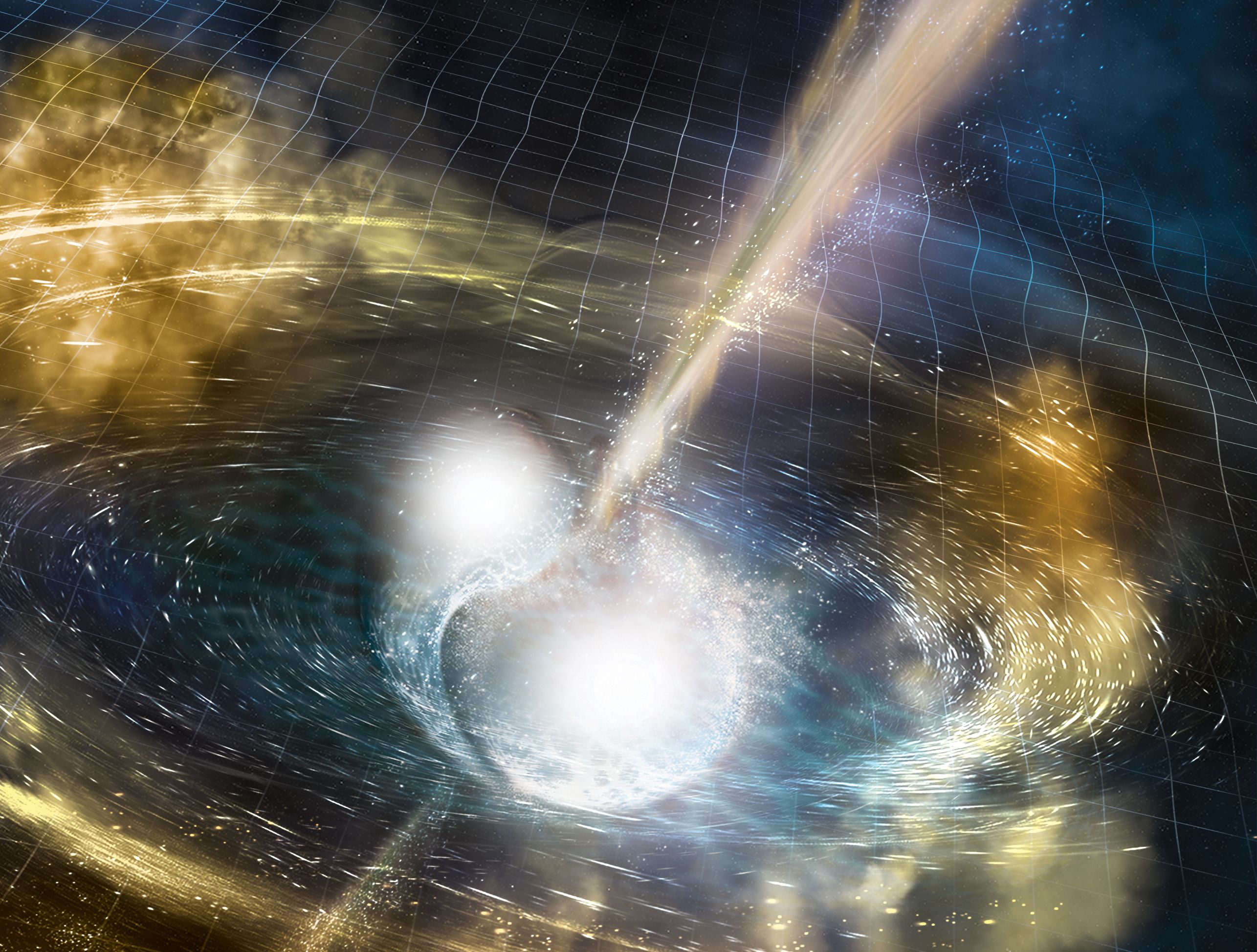
A couple of very cool things happened in that collision, and we expect they happen in all such neutron-star collisions. Just before the neutron stars collided, the gravitational waves were strong enough and at just the right frequency that the National Science Foundation’s Laser Interferometer Gravitational-Wave Observatory (LIGO) and European Gravitational Observatory’s Virgo could detect them. Just after the collision, those waves quickly faded out because there are no longer two things orbiting around each other!
LIGO and Virgo are ground-based detectors waiting for gravitational waves to pass through their facilities on Earth. When it is active, it can detect them from almost anywhere in space.
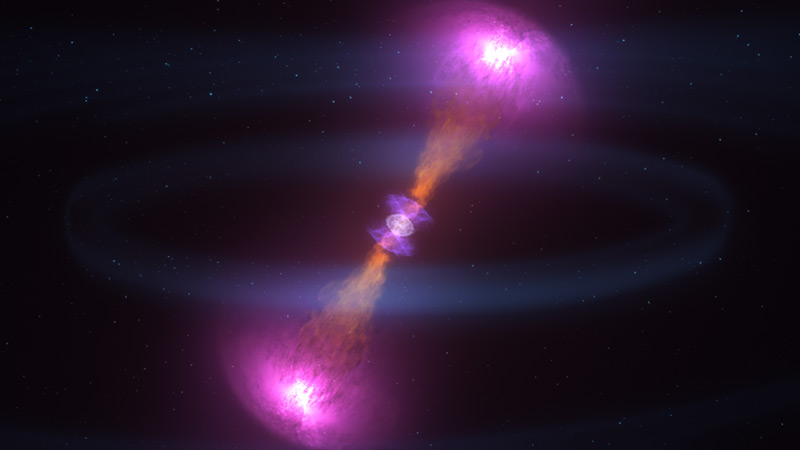
另一件发生的事就是我们所说的伽马射线暴。当它们靠得非常近时,中子星会碎裂开来,产生一场壮观但短暂的爆炸。在几秒钟内,我们的Fermi satellite观测到了那次爆炸发出的伽马射线。费米伽马射线暴监测器是我们观测天空的眼睛之一,专门寻找科学家们希望一发生就能捕捉到的这类伽马射线暴。
而那些伽马射线在引力波信号之后仅仅1.7秒就到达了。这次事件所在的星系距离我们1.3亿光年,所以光和引力波在被我探测到之前已经旅行了1.3亿年。
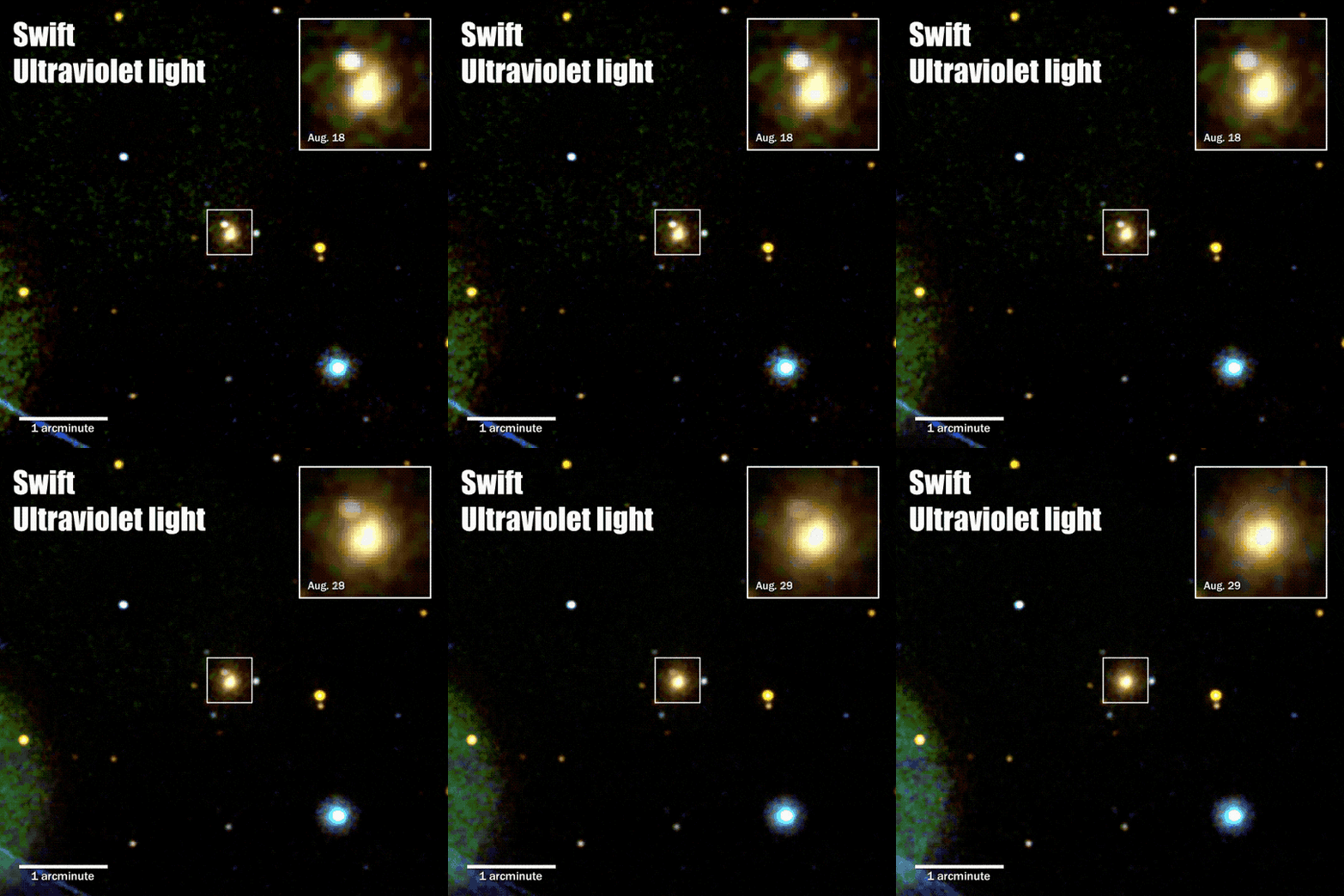
在最初的伽马射线暴之后,爆炸产生的碎片继续发光,并随着向外膨胀而逐渐变暗。我们的Swift、Hubble、Chandra和Spitzer望远镜,以及多台地面天文台,都准备好用紫外线、光学、X射线和红外线来观测这次爆炸的余辉。这种卫星之间的协同观测,是我们几十年来一直与国际伙伴合作进行的事情,这样我们就能尽可能快地、尽可能多地用不同波长捕捉到这样的事件。

天文学家一直认为中子星并合是某一类伽马射线暴的成因——即短伽马射线暴,就像他们在8月17日观测到的那次一样。直到我们能够把卫星数据与LIGO/Virgo的信息结合起来,我们才能直接证实这一点。

That event began a new chapter in astronomy. For centuries, light was the only way we could learn about our universe. Now, we’ve opened up a whole new window into the study of neutron stars and black holes. This means we can see things we could not detect before.

The first LIGO detection was of a pair of merging black holes. Mergers like that may be happening as often as once a month across the universe, but they do not produce much light because there’s little to nothing left around the black hole to emit light. In that case, gravitational waves were the only way to detect the merger.
不过,中子星并合有大量物质可以发光。通过将不同种类的光与引力波结合起来,我们正在了解物质在极端环境下的行为。我们正在进一步了解引力波信息如何与我们已经从光中获得的知识相吻合——在此过程中,我们正在解开一些长期存在的谜团!