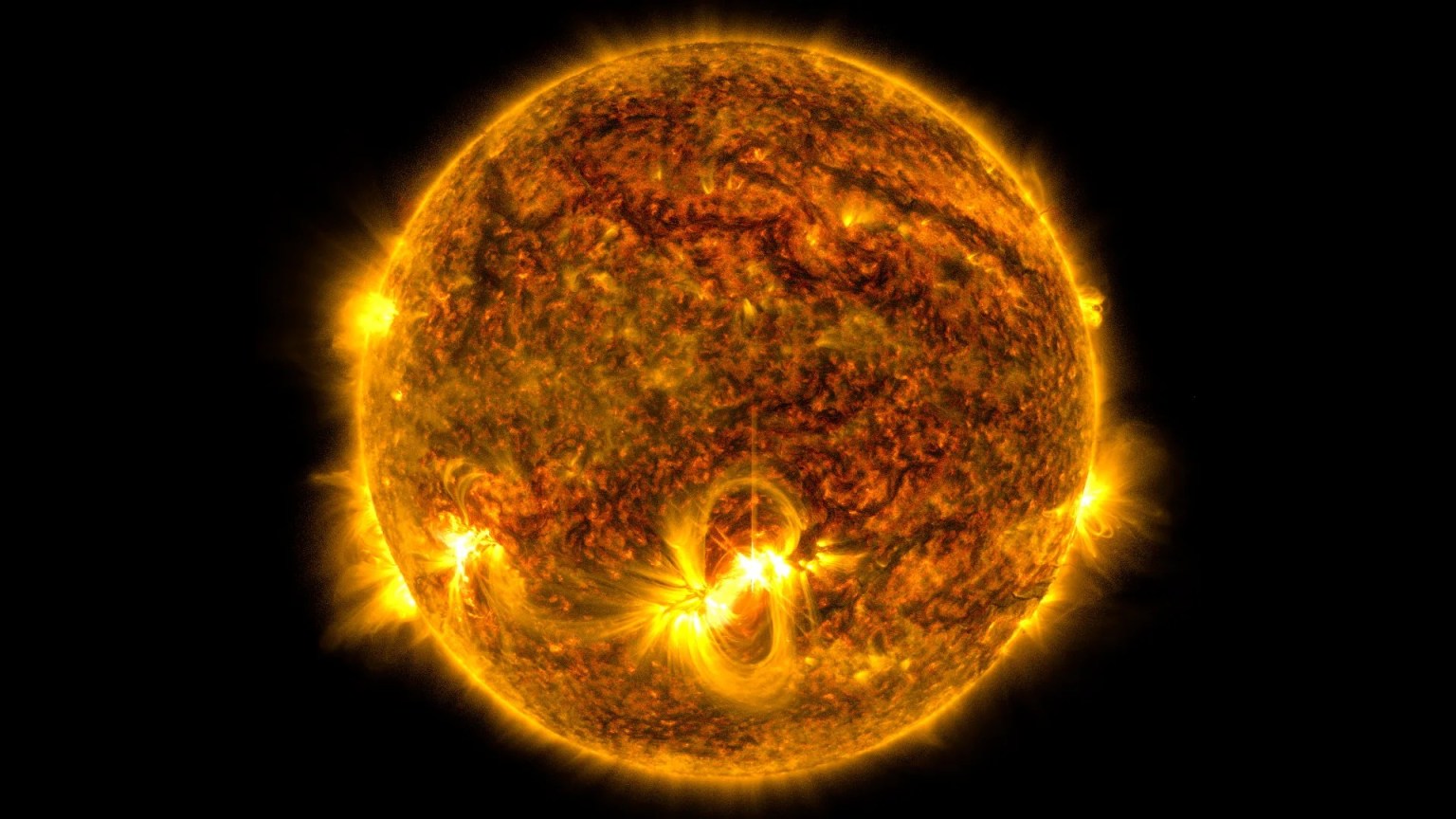
我们能从宇宙的“婴儿照”中学到什么?
如果你看看自己小时候的照片,也许能从中看出今天的你的一些影子——眼神里某种特别的神情,或者未来鼻子、耳朵的雏形。同样,科学家们也在研究宇宙的“婴儿照”,寻找它如何成长为今天我们所知宇宙的线索。这张婴儿照就是cosmic microwave background (CMB),一种弥漫在整个宇宙各个方向的微弱辉光。
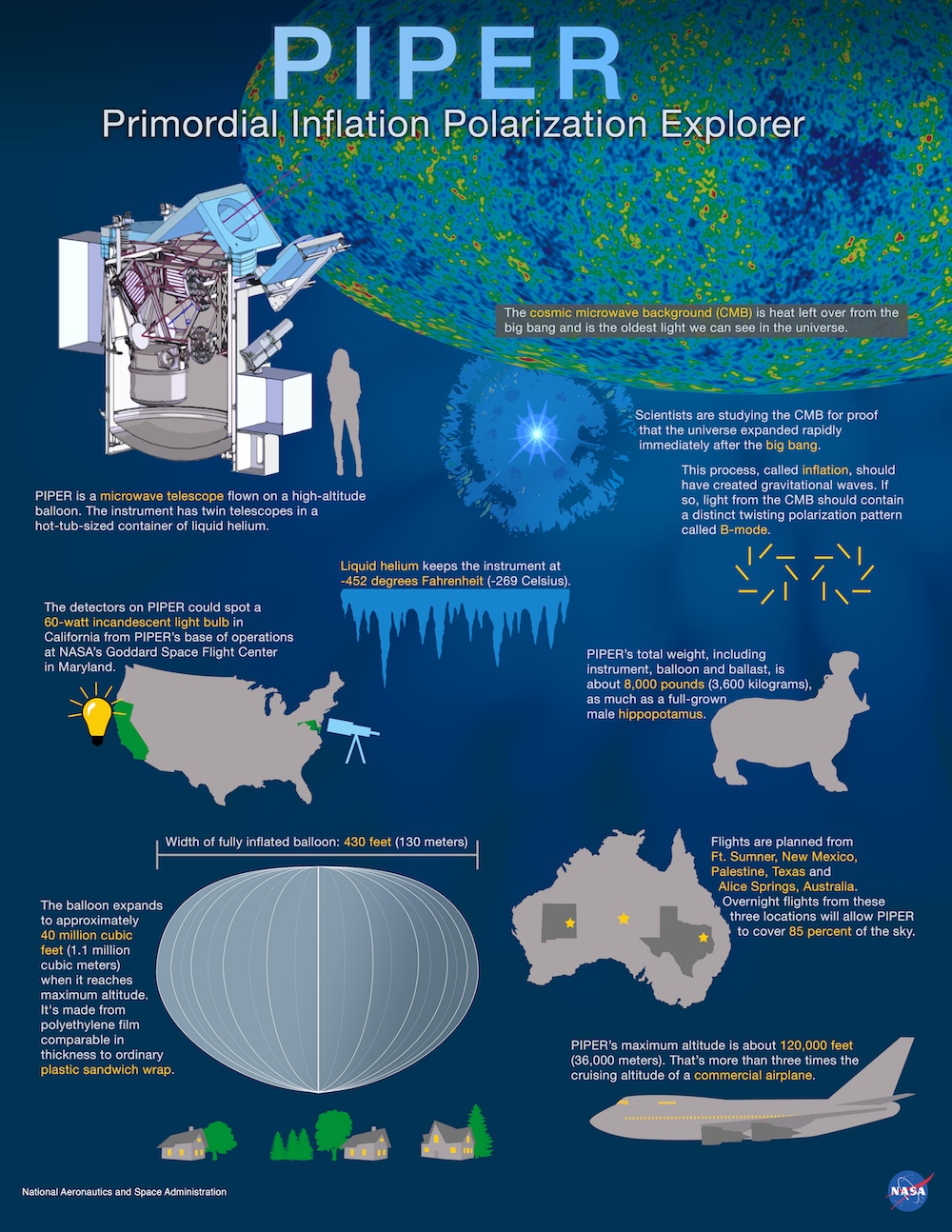
多年来,多台望远镜都承担过观测宇宙婴儿照的任务。其中之一是PIPER,也就是Primordial Inflation Polarization Explorer,它搭乘气球飞行在大气层边缘,寻找宇宙微波背景中细微的图案。
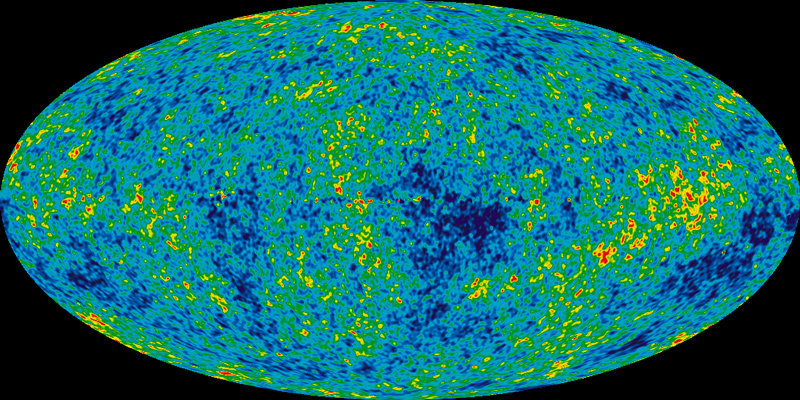
宇宙微波背景很冷,非常非常冷。平均温度约为华氏零下455度。它形成于大爆炸之后38万年,科学家认为大爆炸发生在约138亿年前。
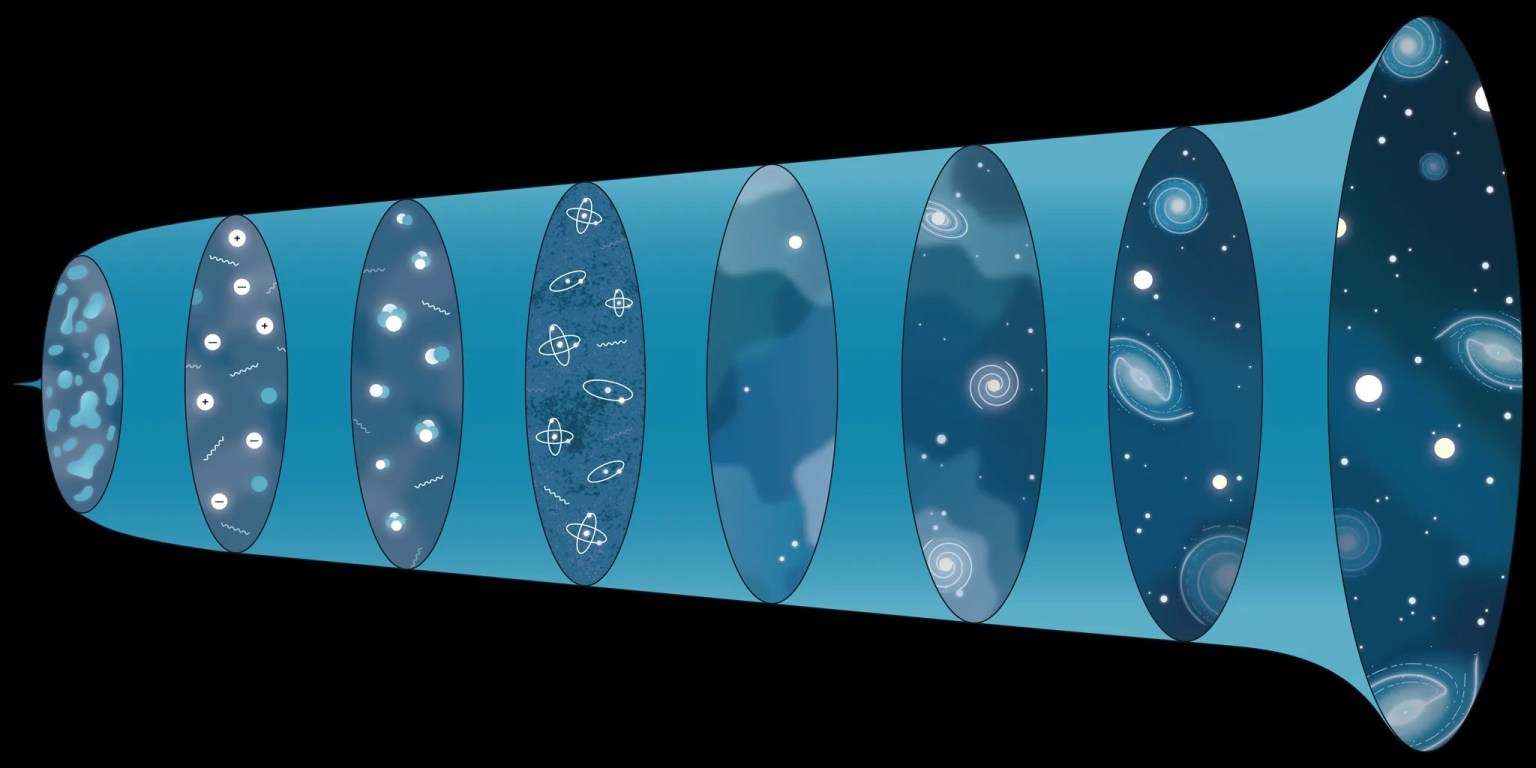
Before the CMB, the universe was a fog of hot, dense plasma. (By hot, we’re talking about 500 million degrees F.) That’s so hot that atoms couldn’t exist yet – there was just a soup of electrons and protons. Electrons are great at deflecting light. So, any light that existed in the first few hundred thousand years after the big bang couldn’t travel very far before bouncing off electrons, similar to the way a car’s headlights get diffused in fog.

After the big bang, the universe started expanding rapidly in all directions. This expansion is still happening today. As the universe continued to expand, it cooled. By the time the universe reached its 380,000th birthday, it had cooled enough that electrons and protons could combine into hydrogen atoms for the first time. (Scientists call this era recombination.) Hydrogen atoms don’t deflect light nearly as well as loose electrons and the fog lifted. Light could now travel long distances across the universe.
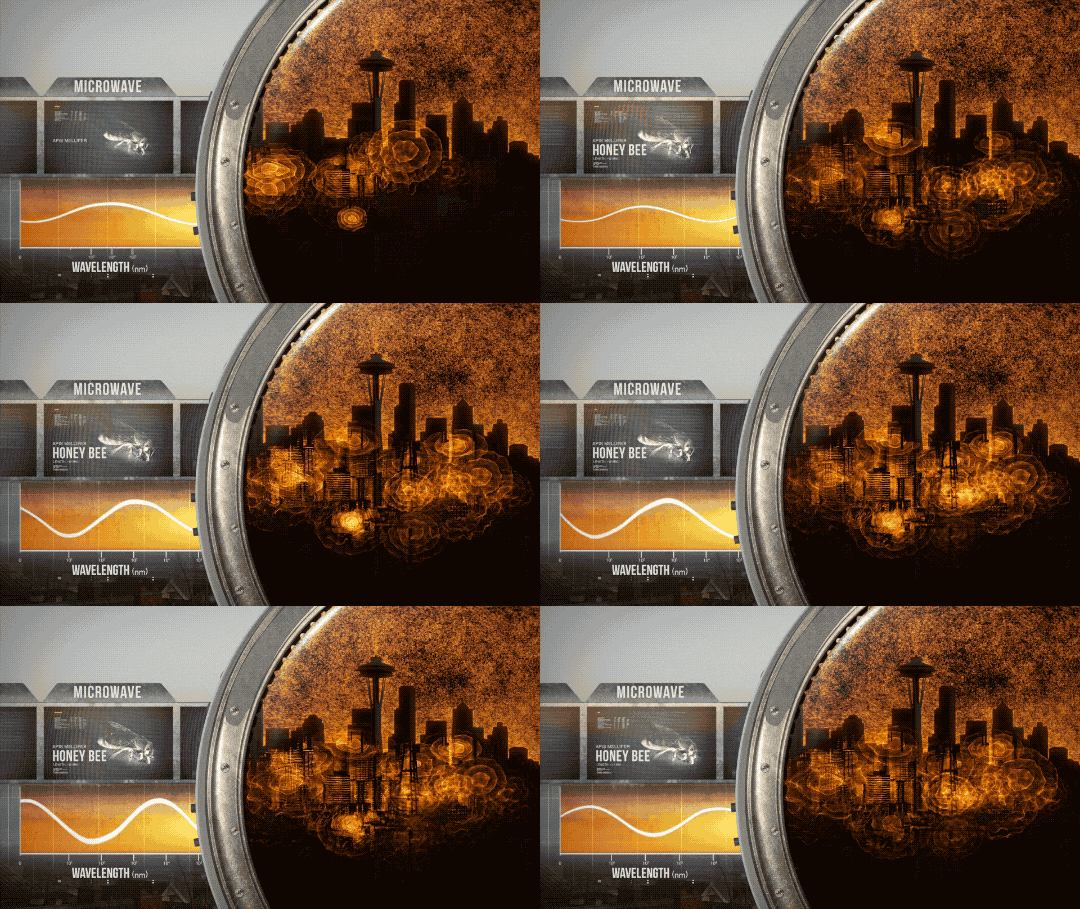
The light we see in the CMB comes from the recombination era. As it traveled across the universe, through the formation of stars and galaxies, it lost energy. Now we observe it in the microwave part of the electromagnetic spectrum, which is less energetic than visible light and therefore invisible to our eyes. The first baby photo of the CMB – really, a map of the sky in microwaves – came from our Cosmic Background Explorer, which operated from 1989 to 1993.
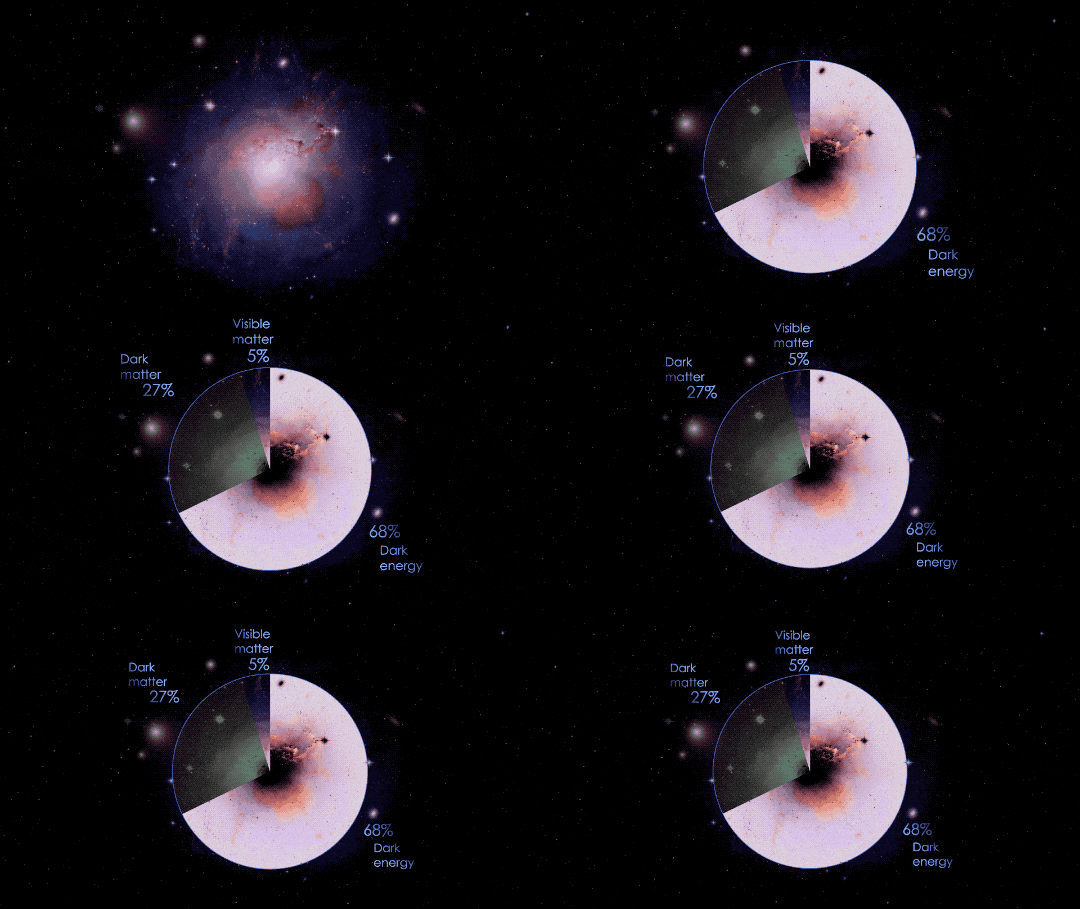
我们为什么对宇宙的“婴儿照片”如此感兴趣?嗯,它帮助我们了解了很多关于今天周围宇宙结构的知识。例如,Wilkinson Microwave Anisotropy Probe 制作了一张宇宙微波背景的详细地图,并帮助我们了解到宇宙是由 68 percent dark energy, 27 percent dark matter and just 5 percent normal matter 组成的——也就是你和恒星都是由这种东西构成的。

就在 big bang 之后,我们相当确定宇宙非常小。真的非常小。我们今天看到的一切都被塞进了一个比质子还小的东西里。如果宇宙一开始就那么小,那么它就会遵循量子力学的规律。量子力学允许各种奇怪的事情发生。物质和能量可以从未来“借”来,然后又碰撞回虚无。接着宇宙暴胀发生了,宇宙突然膨胀了一万亿万亿倍。

所有这些混沌创造了一片引力波的海洋。(这些被称为“原初”引力波,来源与 gravitational waves you may have heard about from merging neutron stars 和黑洞不同。)原初引力波的信号有点像白噪声,而合并的死恒星发出的信号则像一声可以穿透噪声的口哨。
这些引力波充满了婴儿宇宙,并在宇宙微波背景的光中创造了独特的图案,称为B模偏振。这些图案具有手性,这意味着尽管它们是彼此的镜像,但并不对称——就像试图把左手手套戴在右手上一样。它们与另一种称为E模的偏振不同,E模是对称的,呼应了宇宙中物质的分布。
这就是PIPER登场的地方。PIPER的两台望远镜位于一个热水浴缸大小的 liquid helium 容器中,温度约为华氏零下452度。它观测85%的天空,并且极其 sensitive,因此它帮助我们更多地